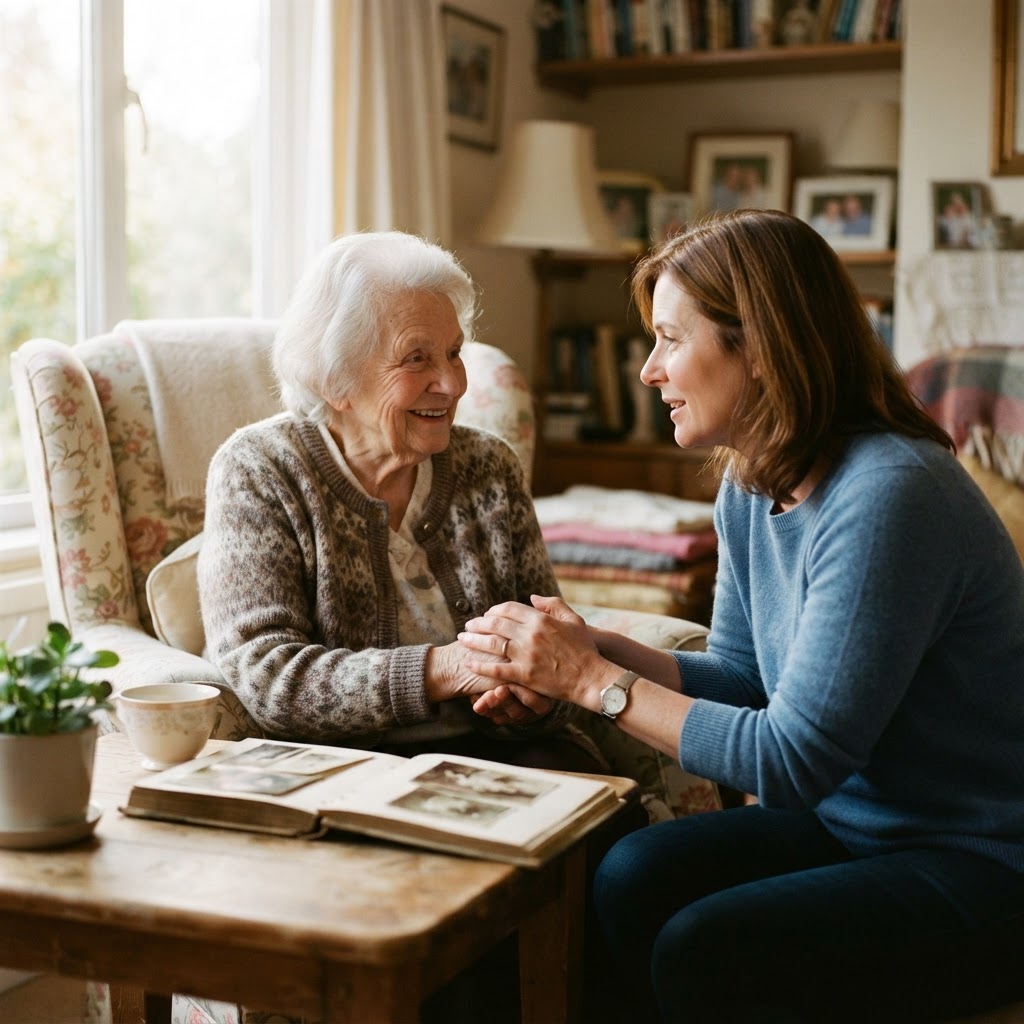
Is there a correct way to talk to your senior with dementia? There is no rulebook. Some conversations will remind you of a time before the diagnosis, while others may leave you feeling helpless and frustrated. The damage dementia does to the brain changes the way your senior hears, processes, and responds to conversation.
Keep Distractions to a Minimum
No blaring TV, no radio, no technology. Keep the space free from anything that could cause your senior's mind to wander. People with dementia have more difficulty expressing their thoughts and emotions, and noise only makes this harder.
Speak as You Usually Would, Gestures and All
Be mindful not to raise your voice (unless your senior has difficulty hearing) and speak in a standard, relaxed tone. If you're calm, you have a greater chance of keeping the atmosphere calm too. A reassuring gesture or holding your senior's hand can go a long way.
Keep Using Names, Even if it Means Repeating Them
When referring to yourself or others, call them by their first names. While you may see your loved one several times during a day, each visit may feel like the first for them. Repeating names remind your senior that you are still talking to them.
Stick to One Topic at a Time
Where possible, try to finish off one topic before starting another. Bouncing between ideas will cause confusion and an eventual breakdown in communication. Check in with your senior before moving on to the next topic.
Use Nonverbal Cues to Facilitate Understanding
Making eye contact, smiling at the right time, nodding in agreement, or giving a thumbs-up can be very beneficial. If your senior is experiencing a good day, a gentle pat on the back or loving caress can do wonders.
Avoid Asking Too Many Questions at Once
When confronted with too many questions at once, your senior may become completely overwhelmed. Stick to simple yes/no questions initially. Once the ice has been broken and you can assess their level of alertness, you can introduce more in-depth questions.
Practice Patience
Staying patient can sometimes seem like an impossible task. Remind yourself that no one chooses dementia or Alzheimer's. Avoid interrupting your senior at all costs — interruption may trigger a negative emotion which may cause a communication breakdown. Response times may also be delayed.
Understand that Dementia Has Ebbs and Flows
On good days when your senior is alert and has good recall, it may create the impression that they are "back to normal." With dementia, this is unfortunately not the case. It's important to note that there will be good and bad days.
Need guidance on dementia care options? Call Options for Senior Living at 602-845-1320 for a free consultation.